Using language to create space.
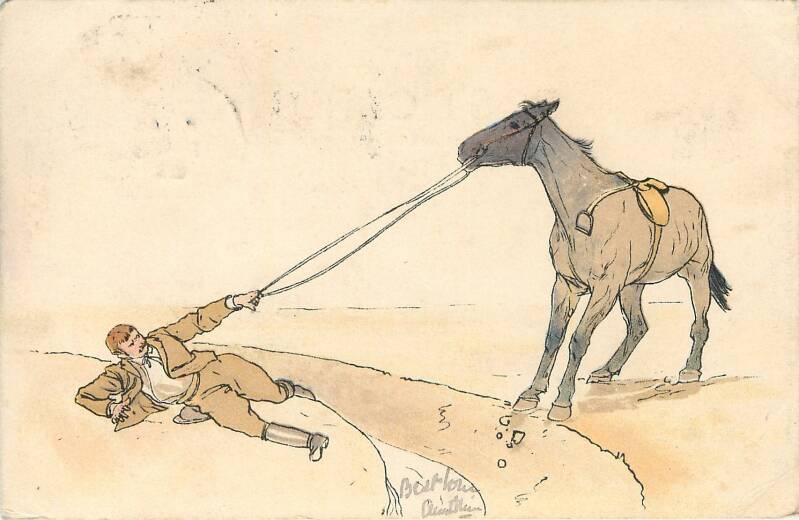
I quite often hear people say it to their horses: ‘stop it, don’t, cut it out,’ and more remarks like that.
And not just horses; dogs hear it, children hear it.
Sometimes over and over again.
Stop pulling.
Stop moving.
Stop fidgeting.
Stop that.
I understand the impulse. We all do it.
Their behavior frustrates us, so we try to make it stop.
But over the years I’ve become more interested in a different question:
What is the question he is asking me?
Not because every behavior has a profound meaning.
And don’t even ask the question because you want an answer, but because of the space asking the question in itself creates.
But because curiosity opens a door that closes by correcting.
A horse keeps pulling his head away; what is the question?
A dog keeps barking at the back door; what is the question?
A child keeps interrupting; what is the question?
A while ago, my horse Simon had a problem that needed medical attention, but he kept pulling one foot away when I wanted to treat it.
Not all of them. Just one.
It looked like resistance, and it frustrated me; why was he being difficult?
But then I became curious, and asked myself: what is the question he is asking me?
(what is it that I not see, hear, or feel?)
Eventually I realized something interesting: the foot he kept offering me was the one that no longer needed treatment.
The act of becoming curious changed the relationship.
His answer wasn’t hidden in words. It was hidden in behavior.
That moment taught me something:
Behavior is often a question dressed up as a problem.
The key thing is that we don’t even need to know the answer (right away).
The answer is not the important part: the question is.
The moment we ask it, something shifts.
We stop pushing against what is happening.
We start paying attention.
And in that small space between certainty and curiosity, relationships have room to grow.
With horses. With dogs. With children.
And perhaps with each other, too.
I.A.m
(I feel a little disclaimer is in order; of course, there are moments when safety comes first. If someone is in immediate danger, action matters more than curiosity. But outside those moments, I find that asking the question often teaches me more than demanding an answer ever could)
Reactie plaatsen
Reacties